Saltar al contenido
e‑ISSN 2184-7770 Acceso abierto · CC BY-NC-ND 4.0
Vol. 13 · Núm. · 2022 jul. 8, 2022 Estudios empíricos con reflexión metodológica

EXPERIENCIAS DE CUIDADO EN LAS PÉRDIDAS DEL EMBARAZO: TRIANGULACIÓN METODOLÓGICA ENTRE ESTUDIOS META ETNOGRÁFICOS Y EMPÍRICO

S
Sara Fernández Basanta De correspondencia Universidad de A Coruña, España sara.fbasanta@udc.es España
C
Carmen Coronado Universidad de A Coruña, España España
M
María Jesús Movilla Fernández Universidad de A Coruña, España España
Páginase722 Publicadojul. 8, 2022 LicenciaAcceso abierto
PDF
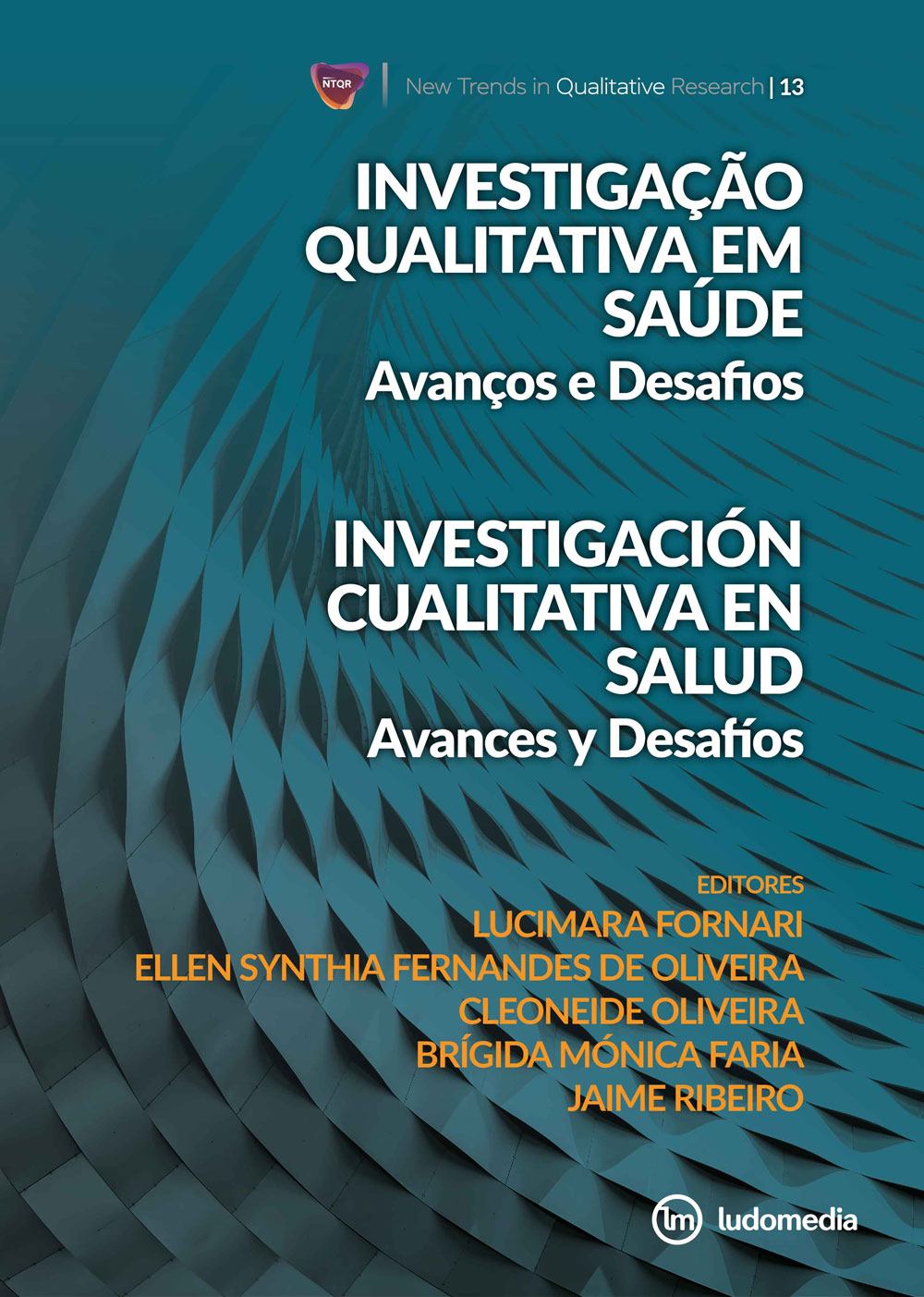
Portada del Volumen 13 de la revista New Trends in Qualitative Research (NTQR)
VOL 13 · NÚM · 2022 [Book Series] Investigación Cualitativa en Salud: Avances y Desafios Ver número

Resumen

Introducción: La pérdida involuntaria del embarazo es un evento relativamente común, especialmente en la práctica clínica de matronas y enfermeras. El cuidado de los profesionales sanitarios, y en especial de enfermeras y matronas, es crucial para el bienestar a corto y largo plazo de los padres. Sin embargo, el personal sanitario informa lo poco preparado que se encuentra y lo estresante y exigente que resulta el cuidado de estas pérdidas. Para conocer las experiencias de enfermeras y matronas en el cuidado de las pérdidas involuntarias del embarazo, se desarrollaron dos estudios, uno con metodología meta-etnográfica (meta-síntesis cualitativa), y otro inspirado en el diseño hermenéutico fenomenológico (estudio empírico), lo que dio lugar a la triangulación metodológica de dicho objetivo. Objetivos: Este manuscrito pretende mostrar y reflexionar sobre el empleo de la triangulación metodológica, entre un estudio meta-etnográficos y uno empírico, para el estudio de las experiencias de cuidado en las pérdidas del embarazo. Métodos: El desarrollo de la meta-etnografía siguió las siete fases descritas por Noblit y Hare (1988), y el estudio hermenéutico fenomenológico se inspiró en el trabajo de Lindseth y Norberg (2004). Resultados: Las enfermeras y matronas que cuidaron de padres que habían sufrido una pérdida involuntaria del embarazo, lidiaron con dificultades que exigieron abandonar la zona de confort. Esto ocasionó que no se involucraran emocionalmente con ellos y que, si lo hacían, el cuidado se basase en su intuición. Conclusiones: La triangulación metodológica nos ha permitido tener una mayor confianza en la credibilidad de los hallazgos del estudio. Ambos estudios informaron al cuerpo de conocimiento en ciencias de enfermería y promueven un cambio en la práctica clínica, ya que los resultados muestran la complejidad de la experiencia del cuidado de enfermería y partería en pérdidas involuntarias de embarazo.

Palabras clave

Referencias

  1. Andipatin, M. G., Naidoo, A. D., & Roomaney, R. (2019). The hegemonic role of biomedical discourses in the construction of pregnancy loss. Women and Birth. https://doi.org/10.1016/j.wombi.2019.03.006
  2. Arman, M., & Rehnsfeldt, A. (2006). The Presence of Love in Ethical Caring. Nursing Forum, 41(1), 4-12. https://doi.org/10.1111/j.1744-6198.2006.00031.x
  3. Arman, M., & Rehnsfeldt, A. (2007). The `Little Extra' That Alleviates Suffering. Nursing Ethics, 14(3), 372-386. https://doi.org/10.1177/0969733007075877
  4. Begley, C. (2003). 'I cried... I had to...': student midwives' experiences of stillbirth, miscarriage and neonatal death. Evidence-Based Midwifery, 1(1), 20-27.
  5. Bolton, S. (2001). Changing faces: nurses as emotional jugglers. Sociology of Health & Illness, 23(1), 85-100. https://doi.org/10.1111/1467-9566.00242
  6. Bondas, T. (2009). Preparing the air for nursing care: A grounded theory study of first line nurse managers. Journal of Research in Nursing, 14(4), 351-362. https://doi.org/10.1177/1744987108096969
  7. Bondas, T. (2010). Nursing leadership from the perspective of clinical group supervision: a paradoxical practice. Journal of Nursing Management, 18(4), 477-486. https://doi.org/10.1111/j.1365-2834.2010.01085.x
  8. Bondas, T. E. (2003). Caritative leadership: ministering to the patients. Nursing administration quarterly, 27(3), 249-253.
  9. Britten, N., Campbell, R., Pope, C., Donovan, J., Morgan, M., & Pill, R. (2002). Using meta ethnography to synthesise qualitative research: a worked example. Journal of health services research & policy, 7(4), 209-215.
  10. Dallay, É. G. (2013). Le deuil périnatal de « l’enfant né sans vie ». Annales Médico-psychologiques, revue psychiatrique, 171(3), 182-188. https://doi.org/http://dx.doi.org/10.1016/j.amp.2013.01.017
  11. Denzin, N. K. (2017). The research act: A theoretical introduction to sociological methods. Routledge.
  12. Due, C., Chiarolli, S., & Riggs, D. W. (2017). The impact of pregnancy loss on men's health and wellbeing: a systematic review. BMC Pregnancy Childbirth, 17(1), 380. https://doi.org/10.1186/s12884-017-1560-9
  13. Ellis, A., Chebsey, C., Storey, C., Bradley, S., Jackson, S., Flenady, V., . . . Siassakos, D. (2016). Systematic review to understand and improve care after stillbirth: a review of parents’ and healthcare professionals’ experiences. BMC pregnancy and childbirth, 16(1), 16.
  14. Eriksson, K. (1994). Theories of caring as health. Caring as healing: Renewal through hope, 3-20.
  15. Farmer, T., Robinson, K., Elliott, S. J., & Eyles, J. (2006). Developing and implementing a triangulation protocol for qualitative health research. Qualitative health research, 16(3), 377-394.
  16. Fenstermacher, K., & Hupcey, J. E. (2013). Perinatal bereavement: a principle-based concept analysis. Journal of Advanced Nursing, 69(11), 2389-2400. https://doi.org/10.1111/jan.12119
  17. Fernández, M. Á. G. (2011). Pérdida de poder de las direcciones de enfermería de Atención Primaria. Enfermería clínica, 21(4), 187-188.
  18. Fernández, S. (2020). Duelo perinatal: Análisis de las dificultades y de los elementos facilitadores presentes en el afrontamiento familiar (Estudio DPAFIS) [Tesis Doctoral]. Programa Oficial de Doctorado en Ciencias de la Salud. Univ da Coruña. Repositorio Universidade Coruña https://ruc.udc.es/dspace/
  19. Fernández-Basanta, S., Coronado, C., Bondas, T., & Movilla-Fernández, M.-J. (2021). Primary healthcare midwives’ experiences of caring for parents who have suffered an involuntary pregnancy loss: a phenomenological hermeneutic study. Midwifery, 92, 102863.
  20. Fernández-Basanta, S., Movilla-Fernández, M.-J., Coronado, C., Llorente-García, H., & Bondas, T. (2020). Involuntary Pregnancy Loss and Nursing Care: A Meta-Ethnography. International Journal of Environmental Research and Public Health, 17(5), 1486.
  21. Fernández?Basanta, S., Coronado, C., Bondas, T., Llorente?García, H., & Movilla?Fernández, M. J. (2021). Unravelling the grief of involuntary pregnancy loss: A meta?ethnography of midwives’ and nurses’ emotional experiences. Scandinavian journal of caring sciences.
  22. Flenady, V., Boyle, F., Koopmans, L., Wilson, T., Stones, W., & Cacciatore, J. (2014). Meeting the needs of parents after a stillbirth or neonatal death. BJOG: An International Journal of Obstetrics & Gynaecology, 121(s4), 137-140.
  23. Frøen, J. F., Cacciatore, J., McClure, E. M., Kuti, O., Jokhio, A. H., Islam, M., & Shiffman, J. (2011). Stillbirths: why they matter. The Lancet, 377(9774), 1353-1366.
  24. Granero-Moya, N., Frías-Osuna, A., Barrio-Cantalejo, I. M., & Ramos-Morcillo, A. J. (2016). Dificultades de las enfermeras de atención primaria en los procesos de planificación anticipada de las decisiones: un estudio cualitativo. Atención Primaria, 48(10), 649-656.
  25. Heazell, A. E., Wojcieszek, A., Graham, N., & Stephens, L. (2019). Care in pregnancies after stillbirth and perinatal death. International Journal of Birth and Parent Education, 6(2), 23-28.
  26. Henderson, A. (2001). Emotional labor and nursing: an under-appreciated aspect of caring work. Nursing Inquiry, 8(2), 130-138. https://doi.org/10.1046/j.1440-1800.2001.00097.x
  27. Hochschild, A. (1983). The Managed Heart University of California Press. Berkeley CA.
  28. Houck, D. (2014). Helping nurses cope with grief and compassion fatigue: an educational intervention. Clinical Journal of Oncology Nursing, 18(4).
  29. Hunter, B., & Smith, P. (2007). Emotional labour: Just another buzz word?
  30. Hutti, M. H., Polivka, B., White, S., Hill, J., Clark, P., Cooke, C., . . . Abell, H. (2016). Experiences of Nurses Who Care for Women After Fetal Loss. J Obstet Gynecol Neonatal Nurs, 45(1), 17-27. https://doi.org/10.1016/j.jogn.2015.10.010
  31. Huynh, T., Alderson, M., & Thompson, M. (2008). Emotional labour underlying caring: an evolutionary concept analysis. Journal of advanced nursing, 64(2), 195-208.
  32. Joanna Briggs Institute. (2016). Critical appraisal checklist for qualitative research. In: Adelaide: University of Adelaide, Joanna Briggs Institute. Available at: http://joannabriggs. org/research/criticalappraisal-tools. html (accessed 7 July 2016).
  33. Kolte, A. M., Bernardi, L. A., Christiansen, O. B., Quenby, S., Farquharson, R. G., Goddijn, M., & Stephenson, M. D. (2015). Terminology for pregnancy loss prior to viability: a consensus statement from the ESHRE early pregnancy special interest group. Human Reproduction, 30(3), 495-498. https://doi.org/10.1093/humrep/deu299
  34. Koopmans, L., Wilson, T., Cacciatore, J., & Flenady, V. (2013). Support for mothers, fathers and families after perinatal death. Cochrane Database of Systematic Reviews(6). http://onlinelibrary.wiley.com/doi/10.1002/14651858.CD000452.pub3/abstract
  35. Lachal, J., Revah-Levy, A., Orri, M., & Moro, M. R. (2017). Metasynthesis: an original method to synthesize qualitative literature in psychiatry. Frontiers in psychiatry, 8.
  36. Lemetti, T., Stolt, M., Rickard, N., & Suhonen, R. (2015). Collaboration between hospital and primary care nurses: a literature review. International Nursing Review, 62(2), 248-266.
  37. Lindseth, A., & Norberg, A. (2004). A phenomenological hermeneutical method for researching lived experience. Scandinavian journal of caring sciences, 18(2), 145-153.
  38. López García de Madinabeitia, A. P. (2011). Duelo perinatal: un secreto dentro de un misterio. Revista de la Asociación Española de Neuropsiquiatría, 31(1), 53-70.
  39. Maturo, A. (2012). Medicalization: current concept and future directions in a bionic society. Mens sana monographs, 10(1), 122.
  40. McCreight, B. S. (2004). A grief ignored: narratives of pregnancy loss from a male perspective. Sociol Health Illn, 26(3), 326-350. https://doi.org/10.1111/j.1467-9566.2004.00393.x
  41. McCreight, B. S. (2005). Perinatal grief and emotional labour: a study of nurses' experiences in gynae wards. Int J Nurs Stud, 42(4), 439-448. https://doi.org/10.1016/j.ijnurstu.2004.07.004
  42. Neimeyer, R. A. (2001). Meaning reconstruction & the experience of loss. American Psychological Association.
  43. Noblit, G. W., & Hare, R. D. (1988). Meta-ethnography: Synthesizing qualitative studies (Vol. 11). sage.
  44. Papadatou, D. (2000). A proposed model of health professionals' grieving process. OMEGA-Journal of Death and Dying, 41(1), 59-77.
  45. Papadatou, P. D. (2009). In the face of death: Professionals who care for the dying and the bereaved. Springer Publishing Company.
  46. Peters, M. D. J., Lisy, K., Riitano, D., Jordan, Z., & Aromataris, E. (2016). Providing meaningful care for families experiencing stillbirth: A meta-synthesis of qualitative evidence. Journal of Perinatology, 36(1), 3-9. https://doi.org/10.1038/jp.2015.97
  47. Phillips, S. (1996). Labouring the emotions: expanding the remit of nursing work? Journal of advanced nursing, 24(1), 139-143.
  48. Purandare, N., Ryan, G., Ciprike, V., Trevisan, J., Sheehan, J., & Geary, M. (2012). Grieving after early pregnancy loss--a common reality. Ir Med J, 105(10), 326-328.
  49. Ricoeur, P. (1976). Interpretation theory: Discourse and the surplus of meaning. TCU press.
  50. Roehrs, C., Masterson, A., Alles, R., Witt, C., & Rutt, P. (2008). Caring for families coping with perinatal loss. JOGNN - Journal of Obstetric, Gynecologic, and Neonatal Nursing, 37(6), 631-639. https://doi.org/10.1111/j.1552-6909.2008.00290.x
  51. Sjølie, B. M., Hartviksen, T. A., & Bondas, T. (2020). “Navigation to prioritizing the patient”–first-line nurse managers’ experiences of participating in a quality improvement collaborative. BMC Health Services Research, 20(1), 55.
  52. Strandås, M., & Bondas, T. (2018). The nurse-patient relationship as a story of health enhancement in community care: A meta-ethnography. Journal of Advanced Nursing, 74(1), 11-22. https://doi.org/10.1111/jan.13389
  53. Stroebe, M., & Schut, H. (1999). The dual process model of coping with bereavement: Rationale and description. Death Studies, 23(3), 197-224. https://doi.org/10.1080/074811899201046
  54. Tong, A., Flemming, K., McInnes, E., Oliver, S., & Craig, J. (2012). Enhancing transparency in reporting the synthesis of qualitative research: ENTREQ. BMC Medical Research Methodology, 12(1), 181. https://doi.org/10.1186/1471-2288-12-181
  55. Zomorodi, M., & Lynn, M. R. (2010). Critical care nurses' values and behaviors with end-of-life care: perceptions and challenges. Journal of Hospice & Palliative Nursing, 12(2), 89-96.

Licencia

CCBY-NC-ND 4.0
Creative Commons Atribución-NoComercial-SinDerivadas 4.0 Internacional

Puede compartir esta obra solo con fines no comerciales, reconociendo la autoría y sin modificarla. Ver términos de la licencia ↗

§ 06 — Relacionados

Artículos similares en esta revista

Estudios relacionados revisados por pares publicados en esta revista.
Ver todos los números

Reflexive Thematic Analysis Across Unequal Educational Contexts: Methodological Lessons

Bachtiar Bachtiar, Maya Puspitasari, Effendi Mantang, Hilman Qudratuddarsi

Recent scholarship on the integration of artificial intelligence (AI) in education has increasingly emphasized its potential to transform teaching and learning. However…

#Teacher mediation; #Professional learning communities; #Artificial intelligence; #Language teaching;
p. e1384
10.36367/ntqr.22.4.2026.e1384