Saltar al contenido
e‑ISSN 2184-7770 Acceso abierto · CC BY-NC-ND 4.0
Vol. 1 · Núm. · 2020 jul. 23, 2020 Estudios empíricos con reflexión metodológica

COMMUNICATION AND DECISION MAKING IN NEONATAL INTENSIVE CARE: WHY NARRATIVE MEDICINE MATTERS

C
Carmen Carvalho De correspondencia Northern Maternal and Child Center, Porto- Portugal carmencarvalho.bioetica@gmail.com Portugal
A
Ana Vale Lusophone University Porto, Portugal Portugal
S
Susana Magalhães University of Porto / University Fernando Pessoa - Portugal Portugal
Páginas104-121 Publicadojul. 23, 2020 LicenciaAcceso abierto
pdf (inglés)
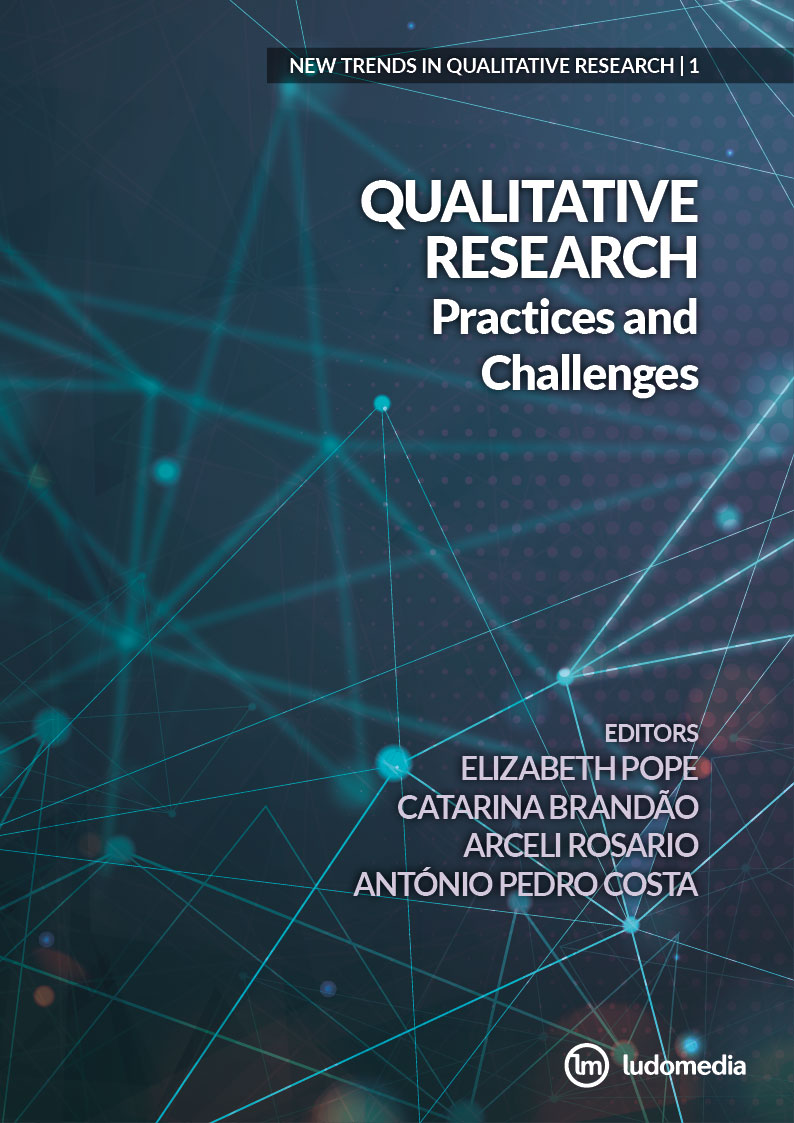
Portada del Volumen 1 de la revista New Trends in Qualitative Research (NTQR)
VOL 1 · NÚM · 2020 [Book Series] Qualitative Research: practices and challenges Ver número

Resumen

Objective: This paper aims to analyse parents’ and health professionals’ discourse, regarding four main areas: (1) the experience of care; (2) communication among all stakeholders; (3) ethical issues; (4) and ethical decision-making. Methodology: The authors collected 62 narratives from health professionals and parents whose newborns have been hospitalized for at least 15 days in the neonatal intensive care unit (NICU). We carried out a qualitative content analysis with the support of NVivo software version 12 Pro. Results: The feelings/emotions are present in a high percentage of narratives (mostly negative ones). Parents´ learning emphasizes coping strategies. Most narratives focus on communicational aspects. Decision-making is referred to in almost half of the narratives. The ethical issues and questions mentioned are mainly related to decision-making. Conclusion: The present study emphasizes narrative relevance in the alignment of parents´ and health professionals´ perspectives to promote therapeutic relationships.

Palabras clave

Referencias

  1. Arzani, A., Valizadeh, L., Zamanzadeh, V., & Mohammadi, E. (2015). Mothers’ strategies in handling the prematurely born infant: a qualitative study. Journal of Caring Sciences, 4(1), 13-24. https://doi.org/10.5681/jcs.2015.002
  2. Beals, D. (2016). Neonatal bioethics. In T. L. Gomella, M. D. Cunningham, & F. G. Eyal (Eds.), Neonatology: Management, procedures, on-call problems, diseases, and drugs (pp. 221-226). McGrawHill.
  3. Cassel, E. (2011). The nature of suffering and the goal of the medicine. Oxford Scholarship Online. https://doi.org/10.1093/acprof:oso/9780195156164.001.0001
  4. Charon, R. (2001). Narrative medicine: Form, function, and ethics. Annals of Internal Medicine, 134(1), 83-87. https://doi.org/10.7326/0003-4819-134-1-200101020-00024
  5. Clarke-Pounder, J. P., Boss, R. D., Roter, D. L., Hutton, N., Larson, S., & Donohue, P. K. (2015). Communication intervention in the neonatal intensive care unit: Can It backfire? Journal of Palliative Medicine, 18(2), 157-161. https://doi.org/10.1089/jpm.2014.0037
  6. Fioretti C., Mazzocco, K., Riva, S., Oliveri, S., Masiero, M., & Pravettoni, G. (2016). Research studies on patients’ illness experience using the Narrative Medicine approach: a systematic review. BMJ Open 6(7), 1-9. http://doi:10.1136/bmjopen-2016-011220
  7. Gracia, D. (2003). Ethical case deliberation and decision making. Medicine, Health Care, and Philosophy, 6(3), 227-233. https://doi.org/10.1023/A:1025969701538
  8. Hawley, S. T., & Morris, A. M. (2017). Cultural challenges to engaging patients in shared decision making. Patient Education and Counseling, 100(1), 18–24. https://doi.org/10.1016/j.pec.2016.07.008
  9. Hurwitz, B., & Spinozzi, P. (2011). Narrative (in) medicine. In: Spinozzi, P., & Hurwitz, B. (Eds.), Discourses and narrations in the biosciences (pp. 73–87). Vandenhoeck & Ruprecht Unipress.
  10. Lakoff, G., & Johnson, M. (2003). Metaphors we live by. The University of Chicago Press.
  11. Lantos, J. D. (2018). Ethical problems in decision making in the neonatal ICU. New England Journal of Medicine, 379(19), 1851–1860. https://doi.org/10.1056/NEJMra1801063
  12. Lefkowitz, D. S., Baxt, C., & Evans, J. R. (2010). Prevalence and correlates of posttraumatic stress and postpartum depression in parents of infants in the neonatal intensive care unit (NICU). Journal of Clinical Psychology in Medical Settings, 17(3), 230–237. https://doi.org/10.1007/s10880-010-9202-7
  13. Levetown, M. (2008). Communicating with children and families: From everyday interactions to skill in conveying distressing information. Pediatrics, 121(5), 1441-1460. https://doi.org/10.1542/peds.2008-0565
  14. Lieblich, A., Tuval-Mashiach, R. & Zilber, T. (1998). Narrative Research: Reading, Analysis, and Interpretation. SAGE. https://doi.org/10.4135/9781412985253
  15. Murphy, J. W., Choi, J. M., & Cadeiras, M. (2017). The role of clinical records in narrative medicine: A discourse of message. The Permanente Journal, 20(2), 103–108. https://doi.org/10.7812/TPP/15-101
  16. Poirier, S. (1999). Voice: Structure, politics, and values in the medical narrative. HEC Forum, 11(1), 27-37. https://doi.org/10.1023/a:1008852301505
  17. Poirier, J., Clapier-Valladon, S., & Raybaut, P. (1995). Histories of life: theory and practice. Celta Ed.
  18. Purdy, I. B., & Wadhwani, R. T. (2006). Embracing bioethics in neonatal intensive care, part II: Case histories in neonatal ethics. Neonatal Network, 25(1), 43–53. https://doi.org/10.1891/0730- 0832.25.1.43
  19. Squire, C., Andrews, M., Davis, M., Esin, C., Harrison, B., Hyden, L., & Hyden, M. (2014). What is narrative research? Bloomsburry Academic Ed.
  20. Tekiner, H. (2017). Ethical considerations related to narrative medicine. In O. Sayligil (Ed.), Patient centered medicine (pp. 161-175). Intech Open. https://doi.org/10.5772/66167
  21. Weiss, E. M., Barg, F. K., Cook, N., Black, E., & Joffe, S. (2016). Parental decision-making preferences in neonatal intensive care. Journal of Pediatrics, 179, 36-41. https://doi.org/10.1016/j.jpeds.2016.08.030
  22. Wigert, H., Blom, M. D., & Bry, K. (2014). Parents’ experiences of communication with neonatal intensive-care unit staff: An interview study. BMC Pediatrics, 14(1), 1–8. https://doi.org/10.1186/s12887-014-0304-5
  23. Zonza, M. (2012). Narrative based medicine and neonatology: An interpretative approach. Journal of Pediatric and Neonatal Individualized Medicine, 1(1), 49–52. https://doi.org/10.7363/010114

Licencia

CCBY-NC-ND 4.0
Creative Commons Atribución-NoComercial-SinDerivadas 4.0 Internacional

Puede compartir esta obra solo con fines no comerciales, reconociendo la autoría y sin modificarla. Ver términos de la licencia ↗

§ 06 — Relacionados

Artículos similares en esta revista

Estudios relacionados revisados por pares publicados en esta revista.
Ver todos los números

Reflexive Thematic Analysis Across Unequal Educational Contexts: Methodological Lessons

Bachtiar Bachtiar, Maya Puspitasari, Effendi Mantang, Hilman Qudratuddarsi

Recent scholarship on the integration of artificial intelligence (AI) in education has increasingly emphasized its potential to transform teaching and learning. However…

#Teacher mediation; #Professional learning communities; #Artificial intelligence; #Language teaching;
p. e1384
10.36367/ntqr.22.4.2026.e1384