Saltar al contenido
e‑ISSN 2184-7770 Acceso abierto · CC BY-NC-ND 4.0
Vol. 1 · Núm. · 2020 jul. 23, 2020 Estudios empíricos con reflexión metodológica

COMBINING CRITICAL INCIDENT TECHNIQUE AND CONTENT ANALYSIS TO INVESTIGATE CRITICAL EMOTIONAL BEHAVIORS IN SALESPERSON-CUSTOMER INTERACTIONS

M
Michel Klein De correspondencia University of Montpellier – France michelklein@neuf.fr Francia
F
Fanny Poujol University Paris-Nanterre – France Francia
B
Bruno Lussier HEC Montreal – Canada Canadá
C
Christophe Fournier University of Montpellier- France Francia
Páginas62-80 Publicadojul. 23, 2020 LicenciaAcceso abierto
pdf (inglés)
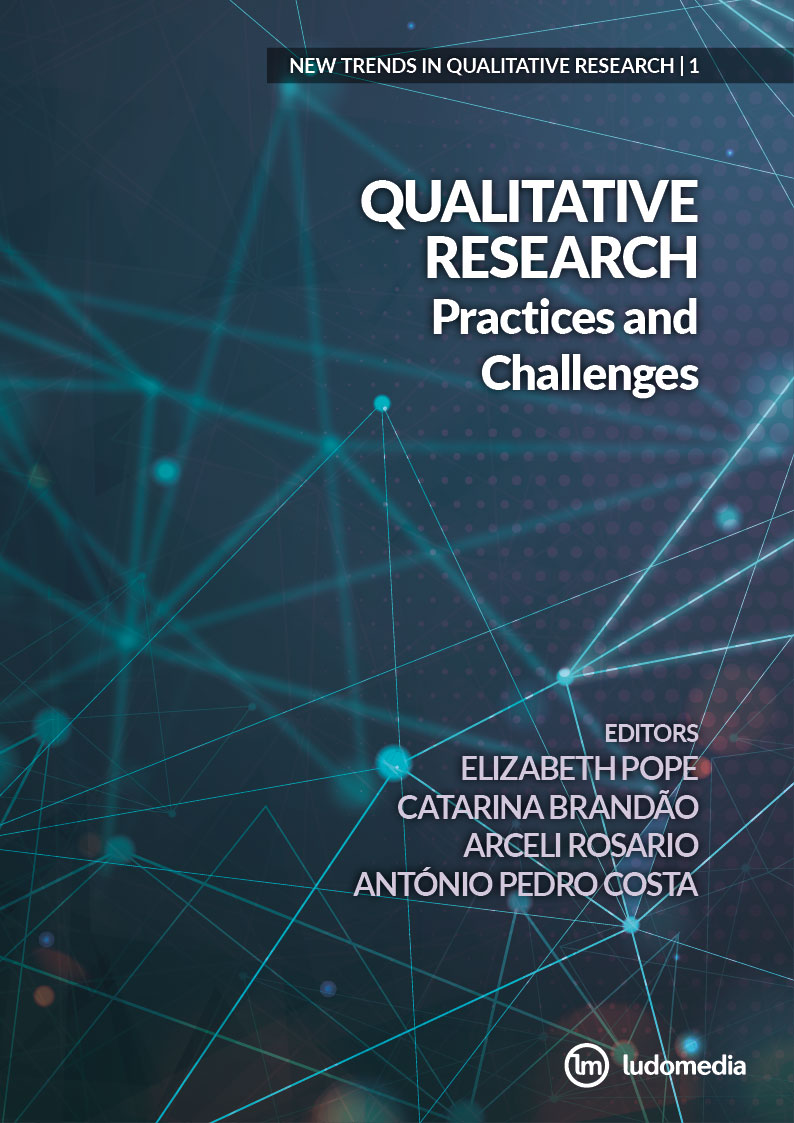
Portada del Volumen 1 de la revista New Trends in Qualitative Research (NTQR)
VOL 1 · NÚM · 2020 [Book Series] Qualitative Research: practices and challenges Ver número

Resumen

In this chapter, we describe how we used both a Critical Incident Technique (CIT) survey and content analysis for collecting and identifying critical emotional behaviors in salesperson-customer interactions involving a subsequent decision to buy or not to buy. Using numbers to generate meaning from qualitative data, we present a detailed exemplar of the staged process consisting of: (1) data collection by means of an open-ended questionnaire; (2) inductive identification of categories; and (3) coding of empirical material, concerning critical emotional behaviors related to success and failure in sales interactions. Using this work, the chapter proposes a specific CIT survey process to identify critical phenomena contributing to or hindering the achievement of a specific task. This study also suggests precise category development and content analysis procedures that can be combined with a CIT survey or used to analyze written empirical material from a positivist perspective.

Palabras clave

Referencias

  1. Ashforth, B. E., & Humphrey, R. H. (1993). Emotional labor in service roles: The influence of identity. Academy of Management Review, 18(1), 88-115. https://doi.org/10.2307/258824
  2. Adelmann, P. K. (1995). Emotional labor as a potential source of job stress. In S. L. Sauter & L. R. Murphy (Eds.), Organizational risk factors for job stress (pp. 371–381). American Psychological Association. https://doi.org/10.1037/10173-023
  3. Ashkanasy, N. M., & Daus, C. S. (2002). Emotion in the workplace: The new challenge for managers. Academy of Management Perspectives, 16(1), 76-86. https://doi.org/10.5465/ame.2002.6640191
  4. Bagozzi, R. P., Gopinath, M., & Nyer, P. U. (1999). The role of emotions in marketing. Journal of the Academy of Marketing Science, 27(2), 184-206. https://doi.org/10.1177/0092070399272005
  5. Bhave, D. P., & Glomb, T. M. (2016). The role of occupational emotional labor requirements on the surface acting–job satisfaction relationship. Journal of Management, 42(3), 722-741. https://doi:10.1177/0149206313498900
  6. Bitner, M. J., Booms, B. H., & Tetreault, M. S. (1990). The service encounter: Diagnosing favorable and unfavorable incidents. Journal of Marketing, 54(1), 71-84. https://doi.org/10.2307/1252174
  7. Bitner, M. J., Booms, B. H., & Mohr, L. A. (1994). Critical service encounters: The employee's viewpoint. Journal of Marketing, 58(4), 95-106. https://doi.org/10.2307/1251919
  8. Brotheridge, C. M. (2006). A review of emotional labour and its nomological network: practical and research implications. Ergonomia, 4(28), 295–309.
  9. Butterfield, L. D., Borgen, W. A., Amundson, N. E., & Maglio, A. S. T. (2005). Fifty years of the critical incident technique: 1954-2004 and beyond. Qualitative Research, 5(4), 475-497. https://doi.org/10.1177/1468794105056924
  10. Chell, E. (2004). Critical incident technique. In C. Cassell & G. Symon (Eds.), Essential guide to qualitative methods in organizational research (pp. 45-60). SAGE. https://dx.doi.org/10.4135/9781446280119.n5
  11. Cohen, J. (1960). A coefficient of agreement for nominal scales. Educational and Psychological Measurement, 20(1), 37-46. https://doi.org/10.1177/001316446002000104
  12. Dey, I. (1993). Qualitative data analysis: A user friendly guide for social scientists. Routledge. https://doi.org/10.1017/S135246580001554X
  13. Diefendorff, J. M., & Gosserand, R. H. (2003). Understanding the emotional labor process: A control theory perspective. Journal of Organizational Behavior: The International Journal of Industrial, Occupational and Organizational Psychology and Behavior, 24(8), 945-959. https://doi.org/10.4324/9780203412497
  14. Diefendorff, J. M., Croyle, M. H., & Gosserand, R. H. (2005). The dimensionality and antecedents of emotional labor strategies. Journal of Vocational Behavior, 66(2), 339-357. https://dx.doi.org/10.1016/j.jvb.2004.02.001
  15. Dumez, H. (2016). Comprehensive research: A methodological and epistemological introduction to qualitative research. Copenhagen Business School Press.
  16. Edvardsson, B., & Roos, I. (2001). Critical incident techniques: Towards a framework for analysing the criticality of critical incidents. International Journal of Service Industry Management, 12(3), 251-268. https://dx.doi.org/10.1108/EUM0000000005520
  17. Ekman, P., Friesen, W. V., & Ancoli, S. (1980). Facial signs of emotional experience. Journal of Personality and Social Psychology, 39(6), 1125-1134. https://doi.org/10.1037/h0077722
  18. Flanagan, J. C. (1954). The critical incident technique. Psychological Bulletin, 51(4), 327-358. https://doi.org/10.1037/h0061470
  19. Foddy, W. (1993). Constructing questions for interviews and questionnaires: Theory and practice in social research. Cambridge University Press. https://doi.org/10.1017/CBO9780511518201
  20. Grandey, A. A., & Gabriel, A. (2015). Emotional Labor at a Crossroads: Where Do We Go from Here? Annual Review of Organizational Psychology and Organizational Behavior, 2(1), 323-349. https://doi.org/10.1146/annurev-orgpsych-032414-111400
  21. Grandey, A. A., Fisk, G. M., Mattila, A. S., Jansen, K. J., & Sideman, L. A. (2005). Is “service with a smile” enough? Authenticity of positive displays during service encounters. Organizational Behavior and Human Decision Processes, 96(1), 38-55. https://doi.org/10.1016/j.obhdp.2004.08.002
  22. Gremler, D. D. (2004). The critical incident technique in service research. Journal of Service Research, 7(1), 65-89. https://doi.org/10.1177/1094670504266138
  23. Groth, M., Hennig-Thurau, T., & Walsh, G. (2009). Customer reactions to emotional labor: The roles of employee acting strategies and customer detection accuracy. Academy of Management Journal, 52(5), 958-974. https://doi.org/10.5465/amj.2009.44634116
  24. Guetzkow, H. (1950). Unitizing and categorizing problems in coding qualitative data. Journal of Clinical Psychology, 6(1), 47-58. https://doi.org/10.1002/1097-4679(195001)6:1<47::AID-JCLP2270060111>3.0.CO;2-I
  25. Hennig-Thurau, T., Groth, M., Paul, M., & Gremler, D. D. (2006). Are all smiles created equal? How emotional contagion and emotional labor affect service relationships. Journal of Marketing, 70(3), 58-73. https://doi.org/10.1509/jmkg.70.3.058
  26. Hochschild, A. R. (1983). The managed heart. University of California Press. https://doi.org/10.1002/pam.4050030365
  27. Hülsheger, U. R., & Schewe, A. F. (2011). On the costs and benefits of emotional labor: A meta-analysis of three decades of research. Journal of Occupational Health Psychology, 16(3), 361-389. https://doi.org/10.1037/a0022876
  28. Johnston, R. (1995). The determinants of service quality: Satisfiers and dissatisfiers. International Journal of Service Industry Management, 6(5), 53-71. https://doi.org/10.1108/09564239510101536
  29. Keaveney, S. M. (1995). Customer switching behavior in service industries: An exploratory study. Journal of Marketing, 59(2), 71-82. https://doi.org/10.2307/1252074
  30. Landis, J. R., & Koch, G. G. (1977). An application of hierarchical kappa-type statistics in the assessment of majority agreement among multiple observers. Biometrics, 33(2), 363-374. https://doi.org/10.2307/2529786
  31. Lin, A. C. (1998). Bridging positivist and interpretivist approaches to qualitative methods. Policy Studies Journal, 26(1), 162-180. https://doi.org/10.1111/j.1541-0072.1998.tb01931.x
  32. Paillé, P., & Mucchielli, A. (2016). L'analyse qualitative en sciences humaines et sociales [Qualitative analysis in human and social sciences] (4th ed.). Armand Colin.
  33. Pellat, G., Poujol, F., & Siadou-Martin, B. (2010). L'orientation client du vendeur du point de vue du consommateur: les apports de la théorie de l'attachement [The customer’s evaluation of the salesperson’s customer orientation: the attachement theory perspective]. Management & Avenir, (1), 246-266.
  34. Perreault Jr, W. D., & Leigh, L. E. (1989). Reliability of nominal data based on qualitative judgments. Journal of Marketing Research, 26(2), 135-148. https://doi.org/10.2307/3172601
  35. Pugliesi, K. (1999). The consequences of emotional labor: Effects on work stress, job satisfaction, and well- being. Motivation and Emotion, 23(2), 125-154. https://doi.org/10.1023/A:1021329112679
  36. Rafaeli, A., & Sutton, R. I. (1987). Expression of emotion as part of the work role. Academy of Management Review, 12(1), 23-37. https://doi.org/10.2307/257991
  37. Ronan, W. W., & Latham, G. P. (1974). The reliability and validity of the critical incident technique: A closer look. Studies in Personnel Psychology, 6(1), 53-64.
  38. Sandelowski, M. (2001). Real qualitative researchers do not count: The use of numbers in qualitative research. Research in nursing & health, 24(3), 230-240. https://doi.org/10.1002/nur.1025
  39. Scherer, K. R. (2005). What are emotions? And how can they be measured? Social Science Information, 44(4), 695-729. https://doi.org/10.1177/0539018405058216
  40. Singh, J., & Wilkes, R. E. (1996). When consumers complain: A path analysis of the key antecedents of consumer complaint response estimates. Journal of the Academy of Marketing Science, 24(4), 350–365. https://doi.org/10.1177/0092070396244006
  41. Smith, M. E., Lowe, A., & Thorpe, R. (1991). Management research: An introduction. SAGE.
  42. Sutton, R. I., & Rafaeli, A. (1988). Untangling the relationship between displayed emotions and organizational sales: The case of convenience stores. Academy of Management Journal, 31(3), 461-487. https://doi.org/10.2307/256456
  43. Swan, J. E., & Rao, C. P. (1975). The critical incident technique: A flexible method for the identification of salient product attributes. Journal of the Academy of Marketing Science, 3(2), 296-308. https://doi.org/10.1177/009207037500300220
  44. Tang, C., Seal, C. R., & Naumann, S. E. (2013a). Emotional labor strategies, customer cooperation and buying decisions. Journal of Management and Marketing Research, 13(1), 1-15.
  45. Tang, C., Seal, C. R., Naumann, S. E., & Miguel, K. (2013b). Emotional labor: The role of employee acting strategies on customer emotional experience and subsequent buying decisions. International Review of Management and Marketing, 3(2), 50-57.
  46. Thoits, P. A. (1996). Managing the emotions of others. Symbolic Interaction, 19(2), 85-109. https://doi.org/10.1525/si.1996.19.2.85
  47. Van Der Maren, J. M. (2009). Codage inversé [Reverse coding]. In A. Mucchielli (Ed.), Dictionnaire des méthodes qualitatives en sciences humaines [Dictionary of qualitative methods in the humanities] (p. 19). Armand Colin.
  48. Wharton, A. S., & Erickson, R. I. (1993). Managing emotions on the job and at home: Understanding the consequences of multiple emotional roles. Academy of management Review, 18(3), 457-486. https://doi.org/10.5465/amr.1993.9309035147
  49. Weber, R. P. (1990). Basic content analysis. SAGE. https://dx.doi.org/10.4135/9781412983488

Licencia

CCBY-NC-ND 4.0
Creative Commons Atribución-NoComercial-SinDerivadas 4.0 Internacional

Puede compartir esta obra solo con fines no comerciales, reconociendo la autoría y sin modificarla. Ver términos de la licencia ↗

§ 06 — Relacionados

Artículos similares en esta revista

Estudios relacionados revisados por pares publicados en esta revista.
Ver todos los números

Reflexive Thematic Analysis Across Unequal Educational Contexts: Methodological Lessons

Bachtiar Bachtiar, Maya Puspitasari, Effendi Mantang, Hilman Qudratuddarsi

Recent scholarship on the integration of artificial intelligence (AI) in education has increasingly emphasized its potential to transform teaching and learning. However…

#Teacher mediation; #Professional learning communities; #Artificial intelligence; #Language teaching;
p. e1384
10.36367/ntqr.22.4.2026.e1384