Saltar al contenido
e‑ISSN 2184-7770 Acceso abierto · CC BY-NC-ND 4.0
Vol. 1 · Núm. · 2020 jul. 23, 2020 Estudios empíricos con reflexión metodológica

POLITICAL PARTICIPATION IN LOCAL GOVERNMENT PLANNING PROCESSES AS CHANGE AGENT IN REDUCING INEQUALITY TO INCREASE ECONOMIC GROWTH

K
Kristina L. Wright De correspondencia University of Florida, United States klwright@ufl.edu Estados Unidos
Páginas46-61 Publicadojul. 23, 2020 LicenciaAcceso abierto
pdf (inglés)
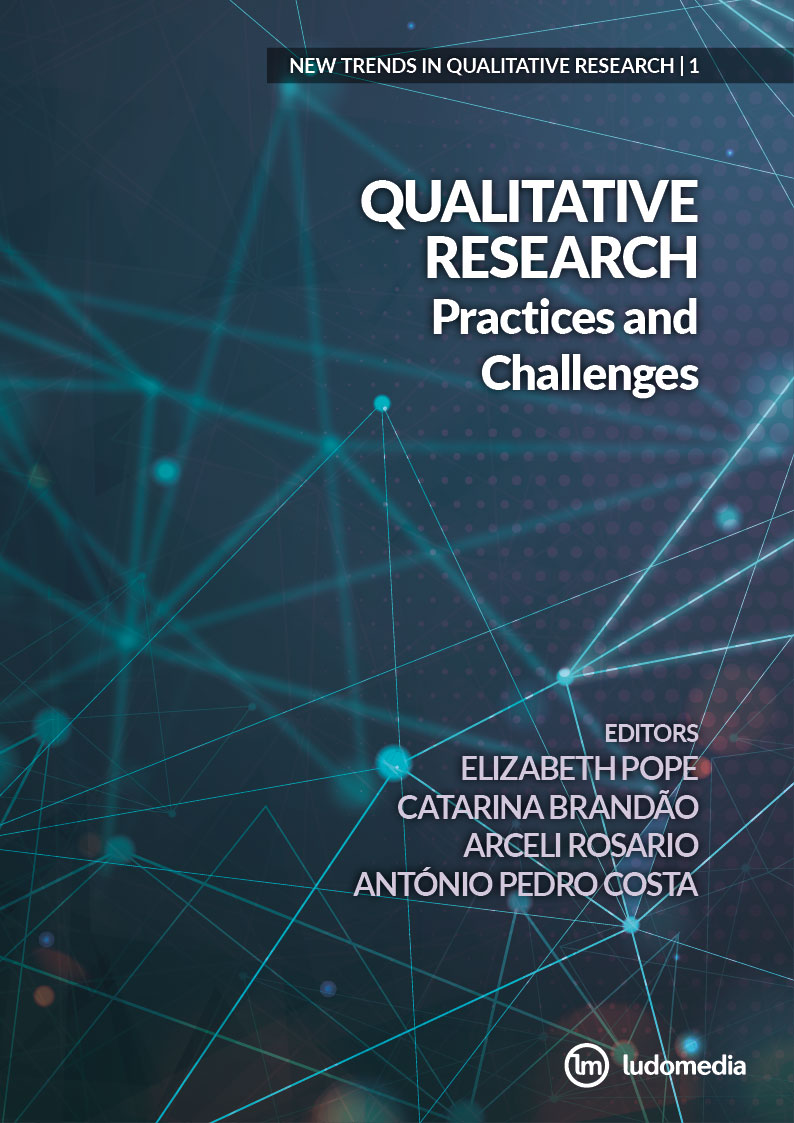
Portada del Volumen 1 de la revista New Trends in Qualitative Research (NTQR)
VOL 1 · NÚM · 2020 [Book Series] Qualitative Research: practices and challenges Ver número

Resumen

Inequality can be reduced through greater political participation, and reduced inequality often results in increased economic growth (Solt, 2008). This research begins with the examination of the City of Miami, Florida and the City of Denver, Colorado as case studies as part of a Qualitative and Mixed Methods Research Design to consider how inclusion, economic growth, and inequality are affected by these processes. The aim is to consider the quality of participatory methods and analyses while exploring the need for ongoing participation. Externalities such as changing property values are considered as a factor in evaluating inequality to more holistically analyze processes and outcomes. The research objectives include measuring and analyzing how a multi-faceted research design with the use of visual communication within public planning processes can further economic growth, while advancing inclusion and levels of collaboration within local government public planning participation processes in the United States. To maximize the impact of this study and to uncover reflexive benefits, the need for further research of local contexts internationally has been uncovered. This will serve as a test in achieving maximum, true diversity and the highest and best returns in terms of economic growth through the reduction of inequality. As such, this study acknowledges the need to continue to replicate this research domestically and internationally for comparative purposes to ensure the opportunity for maximum collaboration and the most thorough investigation and findings into the achievement of economic growth through the reduction of inequality.

Palabras clave

Referencias

  1. City of Denver (2010). Chapter 59. https://library.municode.com/co/denver/codes/code_of_ordinances?nodeId=TITIIREMUCO_CH59ZO
  2. City of Miami (2010). Miami 21. Miami Zoning Code. https://codehub.gridics.com/us/fl/miami
  3. Florida Housing Finance Corporation (2016). Rental Market Study. https://www.floridahousing.org/FHImageWebDocs/Newsroom/Publications/MarketStudies/2016/2016_Full_RMS_final.pdf
  4. Fung, A. (2004). Empowered Participation: Reinventing Urban Democracy. Princeton University Press.
  5. Innes, J., & Booher, D. (1999). Consensus building and complex adaptive systems: A framework for evaluating collaborative planning [Electronic version]. Journal of the American Planning Association, 65(4), 412-423. https://doi.org/10.1080/01944369908976071
  6. Jun, H. (2017). The Link Between Local Comprehensive Plans and Housing Affordability: A Comparative Study of the Atlanta and Detroit Metropolitan Areas. Journal of the American Planning Association, 83(3), 249-261. https://doi.org/10.1080/01944363.2017.1321496
  7. Koc-Michalska, K., & Lilleker, D. (2017). Digital Politics: Mobilization, Engagement, and Participation. Political Communication, 34(1), 1-5, https://doi.org/10.1080/10584609.2016.1243178
  8. Rangwala, K. (Winter 2010). Place-based economy. Economic Development Journal, 9(1), 42-47. https://rangwalaassoc.com/wp-content/uploads/Ideas/Articles/2010_Place_based_Economy.pdf
  9. Solt, F. (2008). Economic Inequality and Democratic Political Engagement. American Journal of Political Science, 52(1), 48-60. https://doi.org/10.1111/j.1540-5907.2007.00298.x
  10. Thomas, A. (2017). Democracy, Capital, and the Rise of the New Inequality. Political Theory, 45(6), 863-876. https://doi.org/10.1177/0090591717693754
  11. U.S. Census Bureau (2018). Housing Vacancies and Homeownership. https://www.census.gov/housing/hvs/index.html
  12. Watt, S., & Wakefield, C., eds. (2017). Teaching Visual Methods in the Social Sciences. Routledge.
  13. Wright Bowen, K. (2011). Participation and Predictability: A Comparative Analysis of Processes and Outcomes of the Form-based Codes and Previous Conventional Zoning Codes of Miami, Florida and Denver, Colorado. [Unpublished master’s thesis]. University of Florida. https://ufdcimages.uflib.ufl.edu/UF/E0/04/38/62/00001/WRIGHT_K.pdf

Licencia

CCBY-NC-ND 4.0
Creative Commons Atribución-NoComercial-SinDerivadas 4.0 Internacional

Puede compartir esta obra solo con fines no comerciales, reconociendo la autoría y sin modificarla. Ver términos de la licencia ↗

§ 06 — Relacionados

Artículos similares en esta revista

Estudios relacionados revisados por pares publicados en esta revista.
Ver todos los números

Reflexive Thematic Analysis Across Unequal Educational Contexts: Methodological Lessons

Bachtiar Bachtiar, Maya Puspitasari, Effendi Mantang, Hilman Qudratuddarsi

Recent scholarship on the integration of artificial intelligence (AI) in education has increasingly emphasized its potential to transform teaching and learning. However…

#Teacher mediation; #Professional learning communities; #Artificial intelligence; #Language teaching;
p. e1384
10.36367/ntqr.22.4.2026.e1384