Saltar al contenido
e‑ISSN 2184-7770 Acceso abierto · CC BY-NC-ND 4.0
Vol. 1 · Núm. · 2020 jul. 7, 2020 Editorial

QUALITATIVE RESEARCH TODAY: VOICES IN AN INTERNATIONAL CONTEXT

E
Elizabeth M. Pope University of West Georgia - United States Estados Unidos
C
Catarina Brandão Faculty of Psychology and Educational Sciences, University of Porto - Portugal Portugal
A
Arceli Rosario Adventist International Institute of Advanced Studies - Philippines Filipinas
A
António Pedro Costa University of Aveiro - Portugal Portugal
Páginas1-7 Publicadojul. 7, 2020 LicenciaAcceso abierto
pdf (inglés)
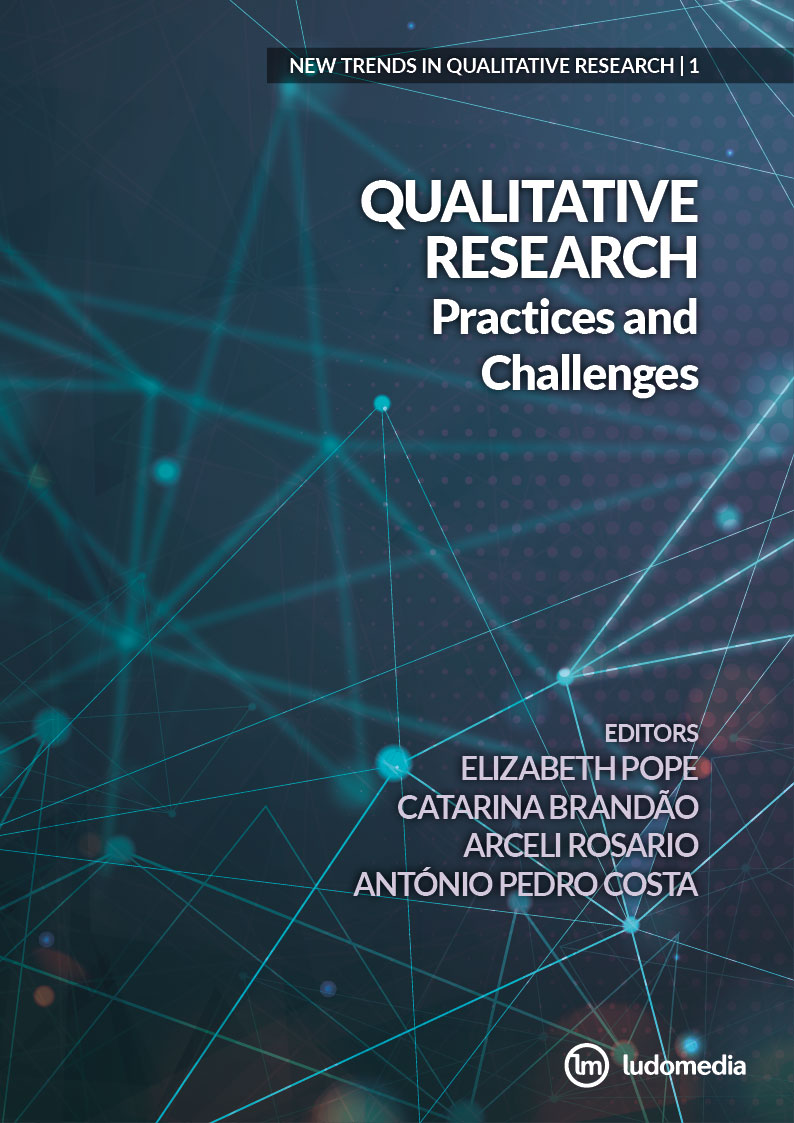
Portada del Volumen 1 de la revista New Trends in Qualitative Research (NTQR)
VOL 1 · NÚM · 2020 [Book Series] Qualitative Research: practices and challenges Ver número

Resumen

In October 2019, the 4th World Conference on Qualitative Research (WCQR) brought together scholars from different parts of the world in Porto, Portugal. That conference provided an international platform upon which scholars initiated conversations regarding practices and challenges in qualitative research, in both academic and corporate contexts. These conversations concerned practices and challenges that on methodological rigor and ethical practices, with the overall aim for holistic integration and excellent qualitative research. WCQR has also allowed the forming of an international and diverse community of qualitative researchers, that annually come together to discuss experiences, trends and ongoing and future projects. This community remains active between editions, conducting collaborative research, training (namely at a distance), and publishing together. It is a movement that will continue to evolve. This book is also a way of congregating and giving voice to this community.

Referencias

  1. Brandão, C. (2015). P. Bazeley and K. Jackson, Qualitative Data Analysis with NVivo (2nd ed.). Qualitative Research in Psychology, 12(4), 492-494. https://doi.org/10.1080/14780887.2014.992750
  2. Charmaz, K. (2004). Premises, principles, and practices in qualitative research: Revisiting the foundations. Qualitative Health Research, 14(7), 976-993. https://doi.org/10.1177/1049732304266795
  3. Cooper, R., Chenail, R. J., & Fleming, S. (2012). A grounded theory of inductive qualitative research education: Results of a meta-data-analysis. The Qualitative Report, 17(52), 1–26. https://nsuworks.nova.edu/tqr/vol17/iss52/3
  4. Costa, A. P., & Amado, J. (2018). Content Analysis Supported by Software (1a). Ludomedia.
  5. deMarrais, K., Moret, L., & Pope, E. M. (2018). “I found a fit”: Doctoral student narratives of coming to a theoretical home in a qualitative research class. International Research in Higher Education, 3(2), 83-98. https://doi.org/10.5430/irhe.v3n2p83
  6. Erlandson, D. A., Harris, E. L., Skipper, B. L., & Allen, S. D. (1993). Doing naturalistic inquiry: A guide to methods. SAGE.
  7. Freeman, M. (2020). Five threats to phenomenology’s distinctiveness. Advance online publication. https://doi.org/10.1177/1077800420912799
  8. Freitas, F., Leite, C. V., de Souza, F. N., & Costa, A. P. (2020). How the “Help” Feature Can Boost the Self- learning Process of CAQDAS: The webQDA Case Study. In Computer Supported Qualitative Research New Trends on Qualitative Research (WCQR2019) (pp. 166–176). https://doi.org/10.1007/978-3-030- 31787-4_14
  9. Groenewald, T. (2004). A phenomenological research design illustrated. International Journal of Qualitative Methods, 3(1), 42-55. https://doi.org/10.1177/160940690400300104
  10. Humble, A. M. (2012). Qualitative data analysis software: A call for understanding, detail, intentionality, and thoughtfulness. Journal of Family Theory & Review, 4(2), 122–136. https://doi.org/10.1111/j.1756- 2589.2012.00125.x
  11. Jackson, K., Paulus, T., & Woolf, N. (2018). The Walking Dead genealogy: Unsubstantiated criticisms of Qualitative Data Analysis Software (QDAS) and the failure to put them to rest. The Qualitative Report, 23(13), 74-91. https://nsuworks.nova.edu/tqr/vol23/iss13/6/
  12. Lincoln, Y. S., Lynham, S. A., & Guba, E. G. (2011). Paradigmatic controversies, contradictions, and emerging confluences, revisited. In Y. S. Lincoln & E. G. Guba (Eds.), The SAGE handbook of qualitative research (pp. 87-128). SAGE.
  13. Paulus, T.M., Evers, J.C., & de Jong, F. (2018). Reflecting on the future of qualitative data analysis software. The Qualitative Report, 23(13). https://nsuworks.nova.edu/tqr/vol23/iss13/1/
  14. Paulus, T., Pope, E., Woolf, N., & Silver, C. (2019). “It will be very helpful once I understand ATLAS.ti”: Teaching ATLAS.ti with the Five-Level QDA method. International Journal of Social Research Methodology, 22(1), 1-18. https://doi.org/10.1080/13645579.2018.1510662
  15. Paulus, T.M. & Wise, A. (2019). Looking for insight, transformation and learning in online talk. Routledge.
  16. Paulus, T. M. & Lester, J. N. (Under contract for 2020). Doing qualitative research with digital tools. SAGE.
  17. Pope, E. M. (2018). An exploratory literature review: Exploring the literature on interfaith dialogue. In N. H. Woolf & C. Silver (Eds.). Qualitative analysis using ATLAS.ti: The Five-Level QDA method (pp. 152-166). Routledge.
  18. Roulston, K., & Bhattacharya, K. (2018). Teaching qualitative inquiry in the era of the big tent: Presenting proliferation and polyphony. International Review of Qualitative Research, 11(3), 251-255. https://doi.org/10.1525/irqr.2018.11.3.251
  19. Roulston, K., Pope, E. M., Paulus, T. M., & deMarrais, K. (2018). Students’ perceptions of learning about qualitative inquiry in online contexts. American Journal of Distance Education, 32(3), 190-201. https://doi.org/10.1080/08923647.2018.1475921
  20. Sandelowski, M. (1986). The problem of rigor in qualitative research. Advances in Nursing Science, 8(3), 27–37. https://doi.org/10.1097/00012272-198604000-00005
  21. Schütz, A. (1945). Some leading concepts of phenomenology. Social Research, 12(1), 77-97. https://www.jstor.org/stable/40982061
  22. Shenton, A. K. (2004). Strategies for ensuring trustworthiness in qualitative research projects. Education for Information, 22(2), 63-75. https://doi.org/10.3233/EFI-2004-22201
  23. Silver, C., & Rivers, C. (2016). The CAQDAS postgraduate learning model: An interplay between methodological awareness, analytic adeptness and technological proficiency. International Journal of Social Research Methodology, 19(5), 593–609. https://doi.org/10.1080/13645579.2015.1061816
  24. Tagg, C. (2011). Reflecting on the impact of qualitative software on teaching. Forum: Qualitative Social Research, 12(1), 1–10. http://www.qualitative-research.net/index.php/fqs/article/view/1570
  25. Tracy, S. J. (2010). Qualitative quality: Eight “big-tent” criteria for excellent qualitative research. Qualitative Inquiry, 16(10), 837-851. https://doi.org/10.1177/1077800410383121
  26. Van Manen, M. (2014). Phenomenology of practice: meaning-giving methods in phenomenological research and writing. Left Coast Press.

Licencia

CCBY-NC-ND 4.0
Creative Commons Atribución-NoComercial-SinDerivadas 4.0 Internacional

Puede compartir esta obra solo con fines no comerciales, reconociendo la autoría y sin modificarla. Ver términos de la licencia ↗

§ 06 — Relacionados

Artículos similares en esta revista

Estudios relacionados revisados por pares publicados en esta revista.
Ver todos los números