Saltar al contenido
e‑ISSN 2184-7770 Acceso abierto · CC BY-NC-ND 4.0
Vol. 1 · Núm. · 2020 jul. 23, 2020 Estudios empíricos con reflexión metodológica

“LIQUID JOB:” THE EMOTIONAL TEXT(URE) OF WORK UNCERTAINTY IN QUORA SITE

C
Concetta Papapicco De correspondencia University of Bari Aldo Moro, Italy concetta.papapicco@uniba.it Italia
Páginas30-45 Publicadojul. 23, 2020 LicenciaAcceso abierto
pdf (inglés)
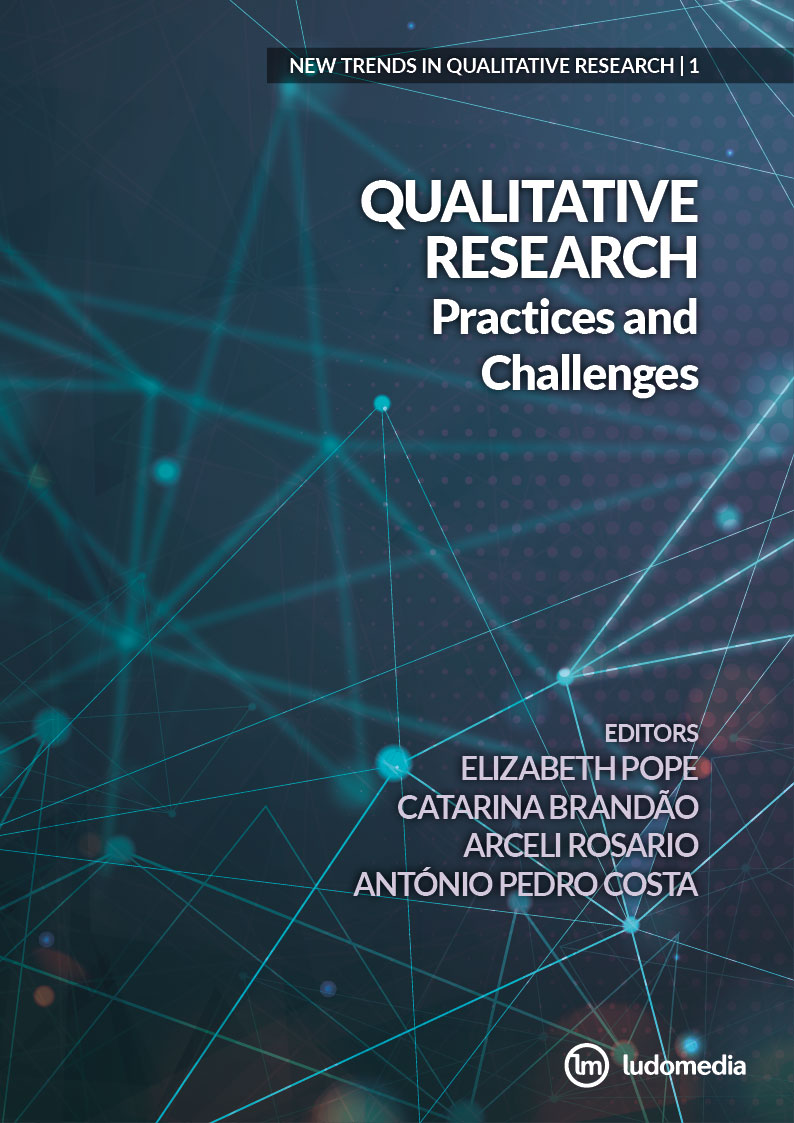
Portada del Volumen 1 de la revista New Trends in Qualitative Research (NTQR)
VOL 1 · NÚM · 2020 [Book Series] Qualitative Research: practices and challenges Ver número

Resumen

The transformation of professional and productive systems involves an increase in inequality and instability in working careers. It is reflected in an increase in precarious and low-paid Workers, above all in the marginalized area, like Italy. We are witnessing of an increase in Internet users looking for information or asking for help in Question and Answer sites, as Quora Inc. In the study, it is hypothesized that the Italian workers, being more exposed to precarious working conditions, use online communities, like Quora, as spaces of mutual-help regarding the English workers. The research investigates how online sites become sharing environments for Italian and English workers and space to try resolving doubts. The methodology used is a mixed-methods approach: a Sentiment Analysis and an Emotional Analysis were carried out as a quantitative methodology; for the qualitative part, a Discourse Analysis was carried out. The quantitative analysis has an exploratory function, through which it has been highlighted the importance of a mixed methodology.

Palabras clave

Referencias

  1. Bauman, Z. (2003). Intimations of postmodernity. London.
  2. Beck, U. (2000). La società del rischio. Verso una seconda modernità [The society of risk. Towards a second modernity]. Carocci.
  3. Becker, G. (1964). Human Capital. Columbia University Press.
  4. Bertolini, S., Torrioni, P. M. (2015). La flessibilità come opportunità e vincolo. Un approccio multidisciplinare [Flexibility as opportunity and constraint. A multidisciplinary approach]. CELID.
  5. Bourdieu, P. (1980). Le capital social: notes provisoires [Social capital: provisional notes]. Actes de la recherche en sciences sociales, 31(1), 2-3. https://www.cairn.info/le-capital-social--9782707148049-page-29.html
  6. Caffi, C. (2007). Mitigation. Elsevier.
  7. Calefato, F., Lanubile, F., Raffaella, M., & Merolla, N. N. (2015). Success factors for effective knowledge sharing in community-based question-answering. Proc. of the International Forum on Knowledge Asset Dynamics (2015), 1431-1441. https://collab.di.uniba.it/fabio/wp-content/uploads/sites/5/2014/05/IFKAD_final1.pdf
  8. Castel R., (1995). Les métamorphoses de la question sociale [The social issue metamorphosis]. Fayard.
  9. Creswell, J. W., & Creswell, J. D. (2017). Research design: Qualitative, quantitative, and mixed methods approaches. Sage.
  10. Donati, P. (2001). Il lavoro che emerge. Prospettive del lavoro come relazione sociale in una economia dopo- moderna [The work that emerges. Perspectives of work as a social relationship in a post-modern economy]. Bollati Boringhieri.
  11. Ekman, P, & Lama, D. (2008). Emotional awareness: Overcoming the obstacles to psychological balance and compassion. Holt.
  12. Gallino, L. (2007). Il lavoro non è una merce. Contro la flessibilità [Work is not a commodity. Against flexibility]. Laterza.
  13. Gallino, L. (2014). Vite rinviate. Lo scandalo del lavoro precario [Lives postponed. The scandal of precarious work]. Laterza.
  14. Hall, D. T. (2002). Protean careers in and out of organizations. Sage.
  15. Harper, F. M., Raban, D., Rafaeli, S., & Konstan, J. A. (2008). Predictors of answer quality in online Q&A sites [Conference paper]. SIGCHI Conference on Human Factors in Computing Systems, Florance, Italy. https://dl.acm.org/doi/10.1145/1357054.1357191
  16. Mininni, G. & Manuti, A. (2017). A rose is more than a rose…the diatextual constitution of subjects and objects. De Gruyter Mouton, 37(2), 243-263. https://doi.org/10.1515/text-2017-0005
  17. Mininni, G. (2010). The method of dialogue: Transaction through interaction. Integrative Psychological and Behavioral Science, 44(1), 23-29. https://doi.org/10.1007/s12124-009-9111-1
  18. Mintu-Wimsatt, A., Kernek, C., & Lozada, H. R. (2010). Netiquette: Make it part of your syllabus. MERLOT Journal of Online Learning and Teaching, 6(1), 264-267. https://jolt.merlot.org/vol6no1/mintu-wimsatt_0310.pdf
  19. Morales, A., Borondo, J., Losada, J. and Benito, R. (2014). Efficiency of human activity on information spreading on Twitter. Social Networks, 39, 1–11. https://doi.org/10.1016/j.socnet.2014.03.007
  20. Morris, M. R., Teevan, J., & Panovich, K. (2010). What do people ask their social networks, and why?: A survey study of status message q&a behavior [Conference paper]. SIGCHI conference on Human factors in computing systems, Atlanta, Georgia, USA. https://dl.acm.org/doi/proceedings/10.1145/1753326
  21. Pang, B., & Lee, L. (2008). Opinion mining and sentiment analysis. Foundations and trends in information retrieval, 2(1-2), 1-135. https://www.cs.cornell.edu/home/llee/omsa/omsa.pdf
  22. Papapicco, C. & Quatera, I. (2019). Disoccupati a tempo pieno! Come occupare i lavoratori dimenticati [Full-time unemployed! How to occupy forgotten workers]. In Croce, C., Prevete, R., Zucca, A. (Eds.), Porte Girevoli. Contributi di ricerca e buone pratiche sul lavoro marginale e le nuove vulnerabilità sociali [Revolving Doors. Research contributions and good practices on marginal work and new social vulnerabilities] (pp. 267-287). Editori Fondazione Giangiacomo Feltrinelli.
  23. Paul, S. A., Hong, L., & Chi, E. H. (2012). Who is authoritative? understanding reputation mechanisms in quora [Conference paper]. Collective Intelligence, Cambridge, Massachusetts, USA. https://arxiv.org/abs/1204.3724
  24. Perry, C. W. (2012). Constructing professional identity in an online graduate clinical training program: Possibilities for online supervision. Journal of Systemic Therapies, 31(3), 53-67. https://doi.org/10.1521/jsyt.2012.31.3.53
  25. Prensky, M. (2001). Digital natives, digital immigrants part 1. On the horizon, 9(5), 1-6. https://www.marcprensky.com/writing/Prensky%20-%20Digital%20Natives,%20Digital%20Immigrants%20-%20Part1.pdf
  26. Pulcini, E. (2006). Click TV. Come Internet e il digitale cambieranno la televisione [Click TV. How the Internet and digital will change television]. Franco Angeli.
  27. Putnam, R. (2001). Bowling alone: The collapse and revival of american community. Simon & Schuster.
  28. Riva, G. (2014). Nativi digitali: crescere e apprendere nel mondo dei nuovi media [Digital natives: growing and learning in the world of new media]. Bologna.
  29. Schreft, S. L., Singh A. (2003). A closer look at jobless recoveries. Economic Review, 88(2), 45-73. https://ideas.repec.org/a/fip/fedker/y2003iqiip45-73nv.88no.2.html
  30. Trentin, B. (1997). La città del lavoro: sinistra e crisi del fordismo [The city of work: the left party and the crisis of Fordism]. Feltrinelli.
  31. Tsakloglou P., & Papadopoulos, F. (2002). Aggregate level and determining factors of social exclusion in twelve European countries. Journal of European Social Policy, 12(3), 211-225. https://doi.org/10.1177/0952872002012003394
  32. Van Dijk, T. A. (1985). Handbook of discourse analysis. London: Academic Press. Sitography https://it.quora.com/

Licencia

CCBY-NC-ND 4.0
Creative Commons Atribución-NoComercial-SinDerivadas 4.0 Internacional

Puede compartir esta obra solo con fines no comerciales, reconociendo la autoría y sin modificarla. Ver términos de la licencia ↗

§ 06 — Relacionados

Artículos similares en esta revista

Estudios relacionados revisados por pares publicados en esta revista.
Ver todos los números

Reflexive Thematic Analysis Across Unequal Educational Contexts: Methodological Lessons

Bachtiar Bachtiar, Maya Puspitasari, Effendi Mantang, Hilman Qudratuddarsi

Recent scholarship on the integration of artificial intelligence (AI) in education has increasingly emphasized its potential to transform teaching and learning. However…

#Teacher mediation; #Professional learning communities; #Artificial intelligence; #Language teaching;
p. e1384
10.36367/ntqr.22.4.2026.e1384